
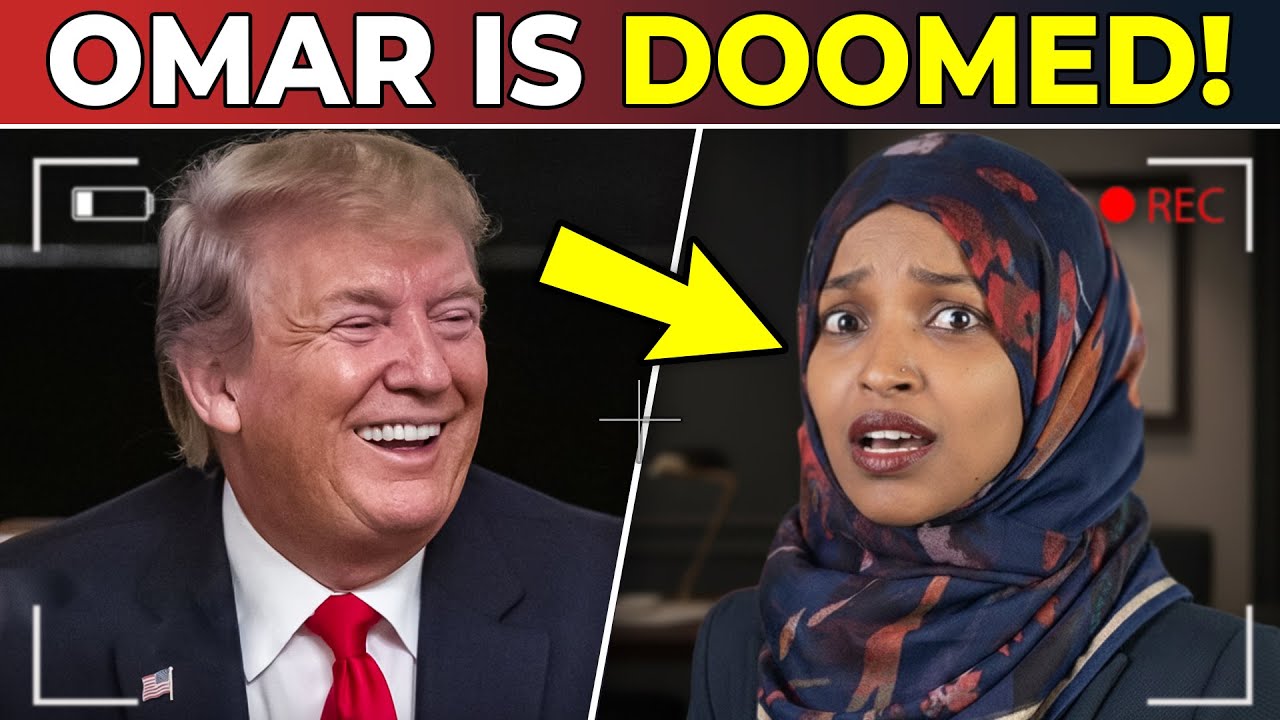
A long, angry video monologue can do two things at once: spotlight a real public problem and blur the line between documented misconduct and politically convenient suspicion. The transcript above—framed as commentary from a channel called “American Zone”—is a clear example of that dual effect. It centers on alleged large-scale fraud in Minnesota’s social programs, repeatedly links that fraud to “Somali” communities, and casts Representative Ilhan Omar and Governor Tim Walz as either complicit or cowardly. It also moves quickly from verifiable concepts (audits, indictments, oversight failures) to speculative allegations (money sent to terrorists, Omar “in the middle of all this,” “prison time maybe”) and emotionally loaded generalizations (“we don’t want those kind of people”).
If the goal is to understand what this clip is doing—and how a viewer should interpret it responsibly—you have to separate (1) the policy issue of fraud, (2) the claims about specific politicians, and (3) the rhetorical strategy that turns a complex story into a moral verdict.
This is not just about Minnesota. It is a template for how scandal narratives travel in modern politics: a real case becomes a symbol, the symbol becomes a community label, and the label becomes a weapon that can be aimed at nearly anyone.
1. The Clip’s Core Story: “Massive Fraud” and a Rapidly Expanding Number
The transcript repeatedly describes a “massive Minnesota fraud scandal” tied to Medicaid and “social programs.” The most striking element is the escalation in scale:
The audience is told it was “to the tune of $1 billion”
Then “federal authorities are saying that could be just the tip of the iceberg”
And it “could have ballooned to $9 billion in stolen taxpayer money”
This kind of numerical leap is the lifeblood of viral outrage. A billion dollars already sounds catastrophic; nine billion sounds like institutional collapse. But the transcript itself does not provide the underlying documents that would allow a listener to evaluate the estimate: What programs? Over what years? What methodology? Is it confirmed loss, suspected fraud exposure, or a high-end projection?
In public finance scandals, numbers often shift as investigators reclassify categories:
Confirmed charged fraud (amounts in indictments)
Identified improper payments (not always criminal)
Estimated vulnerability (what could be fraud)
Total program spending (sometimes mistakenly equated with “stolen”)
A serious reader should treat “ballooned to $9 billion” as a claim that requires precise sourcing—not as a settled fact simply because it is repeated with confidence.
That said, the clip does reflect something that is broadly true about fraud scandals: they rarely happen overnight. Fraud typically thrives when oversight is weak, audits are ignored, enforcement is under-resourced, and political leadership prefers not to confront organized abuse because confrontation is costly.
2. The Political Framing: From “Fraud” to “Somali Welfare Scandal”
Notice the language the narrator chooses: “Somalian welfare scandal,” “Somali social services scammers,” and repeated references to “Somali Muslim areas.” This is framing, not neutral description.
Fraud is not an ethnicity. Fraud is a behavior. Even when particular fraud rings are concentrated within a community (something that can happen for many reasons, including social networks and shared access points), the ethical question is whether commentary treats the case as:
A targeted criminal scheme that should be investigated and prosecuted, or
A community indictment that implies collective guilt
The transcript leans toward the second approach by repeatedly merging “Somali” as an identity label with “scammers,” “fraudsters,” and “terrorist organizations” insinuations. It also includes a familiar claim: that agencies backed down because fraud rings threatened to accuse investigators of racism. That dynamic can exist—fear of reputational harm can reduce scrutiny—but when it is presented without hard evidence, it becomes a convenient explanation that reinforces the narrator’s preferred worldview: that institutions are cowardly, captured, or intimidated.
A critical viewer should ask:
Are “Somali” references essential to understanding the fraud mechanism, or are they a rhetorical amplifier?
Does the clip distinguish between criminals and law-abiding community members?
Does it provide documentation for community-wide claims, or rely on insinuation?
The transcript, as written, does far more insinuation than demonstration.
3. The “Nick Storic” Anecdote: How Outrage is Pre-Loaded Before the Main Claim
Early in the clip, the host mentions a person on “Twitter X” (name uncertain) who went “shopping around for different health care and insurance” in Minnesota, asking “basic questions,” and being told “that is racist… harassment,” and getting “kicked out.”
This anecdote functions like a primer. It sets an emotional baseline: institutions are absurd, questions are censored, and “good cops” are stuck dealing with a system that punishes common sense. The point is not to prove fraud; it is to establish that anyone who questions the system will be called racist—thereby pre-justifying the host’s own community-targeted framing.
But anecdotes are inherently limited. Without video, timestamps, context, and policy rules, a viewer cannot know whether the person was calmly asking legitimate questions, deliberately baiting staff, violating rules, or being mistreated. The story may be accurate, partially accurate, or selectively told.
As rhetoric, it works because it does not need to be proven to feel plausible.
4. The Mayors’ Letter: A Stronger Piece of the Narrative—If Accurately Quoted
The transcript claims “a group of about a hundred mayors” wrote Governor Walz a letter criticizing “fraud, unchecked spending, and inconsistent fiscal management,” and includes a quotation about reduced capacity to maintain infrastructure and services.
This is more concrete than the earlier anecdote because it points to a specific artifact: a letter. If the letter exists and is quoted accurately, it suggests genuine frustration among local officials—possibly across party lines—about state-level fiscal oversight and the downstream impacts on cities.
However, the clip then performs a rhetorical pivot: it turns “mayors are upset about fraud and fiscal management” into “each Minnesotan had $1,500 stolen from them by the Walz administration.”
That move is emotionally satisfying but analytically slippery. Even if a $9 billion fraud estimate were correct, attributing it directly to one administration’s intent—or even negligence—requires evidence about:
When warnings occurred
What agencies knew and when
What legal authority the governor’s office had to intervene
Whether specific reforms were proposed, funded, or blocked
Who benefited and how enforcement responded
In short: outrage is not causation.
5. “Point Fingers” vs. “Solve the Problem”: The Political Incentive Split
The transcript includes two mayor voices with different instincts:
One says mayors are joining “not to point fingers… but to help solve the problem”
Another says, essentially: if someone took $9 billion, “you better believe I’m going to point fingers”
This is a real tension in governance. Administrators often emphasize process improvement and future prevention; the public often wants culpability and punishment. Both are legitimate demands, but they can conflict:
Too much “no blame” language feels like a cover-up.
Too much blame politics can discourage honest internal reporting and lead to scapegoating.
The clip uses this tension to argue that Minnesota leadership is prioritizing “optics over accountability.” That accusation may resonate, but it should be tested against actual actions: audits, reforms, prosecution budgets, agency restructuring, whistleblower protections.
6. The Ilhan Omar Segment: From “Notable Figure” to “Either Naive or Complicit”
The transcript’s harshest claims target Representative Ilhan Omar. It suggests she is “playing the victim,” “framing this as an attack against her identity,” and that she is “right in the middle of all this.” It even suggests a binary:
“Either she’s the most naive congresswoman in the history of congresswoman
Or she knows exactly what was going on the whole time”
That is a classic rhetorical trap: present only two extreme explanations, both damaging, leaving no room for ordinary complexity (limited jurisdiction, imperfect information, partial involvement, competing policy priorities, or mixed responsibility across agencies and levels of government).
The transcript also suggests she failed to “lead the charge for reform,” and instead “minimized” and “shifted the blame.” Those are criticisms that could be evaluated—if you had her full statements and her legislative actions. But the transcript, on its own, does not provide enough primary material to establish the fairness of that characterization.
A particularly risky move is the casual jump to criminal implications: “prison time, maybe… if the fraud scandals are connected to her… with a paper trail.” This hints at criminality while conceding it lacks proof—an approach that can inflame audiences while keeping the speaker rhetorically insulated.
Responsible analysis must say plainly: accusing a named person of criminal involvement requires evidence, not vibes. Oversight failures and policy disputes are not the same as personal theft or conspiracy.
7. The “Waltz Act” and Policy Content: A Potentially Constructive Idea Buried in Partisan Packaging
One of the more substantive policy suggestions in the transcript is a proposed “Waltz Act” described as requiring Inspector Generals to open investigations into any program that sees a 10 increase or greater in total payments within a six-month period.
Whether that specific threshold is wise is debatable—program spending can rise for legitimate reasons, and mandatory investigations could overload watchdog offices. But the general concept is meaningful: automatic triggers for review when spending spikes rapidly can help detect fraud early, especially in fast-expanding benefit environments.
However, the clip packages the policy as a punchline (“Welfare Abuse and Laundering Zillions Act”) rather than as a serious proposal. This is another hallmark of propaganda-style content: introduce a potentially legitimate reform, then wrap it in ridicule to keep the viewer emotionally aligned with the narrator rather than thinking independently about design trade-offs.
If fraud is truly severe, reforms likely need:
better identity verification and eligibility controls
stronger provider enrollment screening
improved claims analytics and anomaly detection
faster audit-to-enforcement pipelines
legal authority and staffing for investigations
protection for staff who raise concerns
community-level engagement that avoids stigmatizing entire groups while still targeting criminal networks
None of that fits neatly into a single meme bill name, but that is what real solutions usually look like.
8. “Meals Act” and the Money Pipeline: The Need for Specificity
The transcript claims fraud was carried out through “the bill called the Meals Act in 2020” put forth by Representative Omar “to just run this money out of the door.” That is a very specific allegation: it implies a direct legislative mechanism enabling fraud.
But the transcript does not provide:
the bill’s exact title and provisions
which programs it funded
whether it was designed for emergency distribution
what safeguards existed or were removed
whether Minnesota agencies implemented it poorly
whether criminal actors exploited loopholes intentionally
In fraud analysis, there is a difference between:
policy designed for speed (often in emergencies)
policy designed with weak controls
policy implemented incompetently
criminal exploitation of otherwise reasonable programs
If you want accountability, you need to know which category applies. Otherwise, all you have is a generalized suspicion that “money went out fast, so someone must have wanted fraud,” which is not logically sound.
9. The Terrorism Link: The Most Serious Allegation—and the Least Supported in the Transcript
Near the end, the clip claims investigators “don’t know how much… may have gone back home to Somalia to terrorist organizations.”
This is the kind of allegation that radically escalates a story. It shifts the emotional center from “tax fraud” to “national security threat.” But it is also the kind of claim that requires the highest evidentiary standard. Money flowing overseas is not inherently terror financing; diaspora remittances are common and often lawful. A fraud scheme can involve overseas transfers, but linking it to terrorism requires specific tracing, beneficiaries, and evidence of intent or destination.
The transcript treats the idea as an ominous “piece of this” without supplying substantiation. That is a powerful narrative technique—raise the most frightening possibility, then let the audience’s imagination do the work.
10. What a Fair-Minded Reader Can Conclude from This Clip Alone
From the transcript alone, a careful reader can reasonably conclude:
The video’s creator is alleging significant fraud problems in Minnesota social programs.
The clip claims there are audits, indictments, and investigations, and it suggests political leadership failed to respond adequately.
The clip is strongly partisan and uses emotionally loaded language to target Ilhan Omar and Tim Walz.
The clip repeatedly links the scandal to Somali identity in a way that risks stigmatization and collective blame.
Several major claims (the $9 billion figure, the “Meals Act” mechanism, Omar’s direct involvement, terror-financing implications) are asserted without primary documentation in the transcript.
What a fair-minded reader cannot conclude from the transcript alone:
That $9 billion is confirmed stolen money.
That Ilhan Omar personally participated in fraud or knowingly enabled it.
That money was sent to terrorist organizations.
That the narrative accurately reflects the full scope of investigative findings rather than selectively highlighting details.
Conclusion: Real Fraud Deserves Real Accountability—But Scandal Content Often Wants Something Else
Fraud in welfare and Medicaid-style programs is a serious issue because it harms everyone: taxpayers lose trust, legitimate recipients get stigmatized, and agencies become less willing to fund the safety net that vulnerable people rely on. When oversight fails, anger is justified.
But the transcript shows how easily legitimate anger can be redirected into a broader political project: turning a public-administration breakdown into an ethnic or ideological indictment, and turning a demand for reform into a demand for removal—“I hope… she leaves… we don’t want those kind of people.”
If Minnesota has a fraud crisis, the correct response is not simply louder accusations. The correct response is documentation, prosecution where warranted, structural reforms, and clear lines of responsibility. Anything less is not accountability—it is entertainment disguised as oversight.