
Introduction
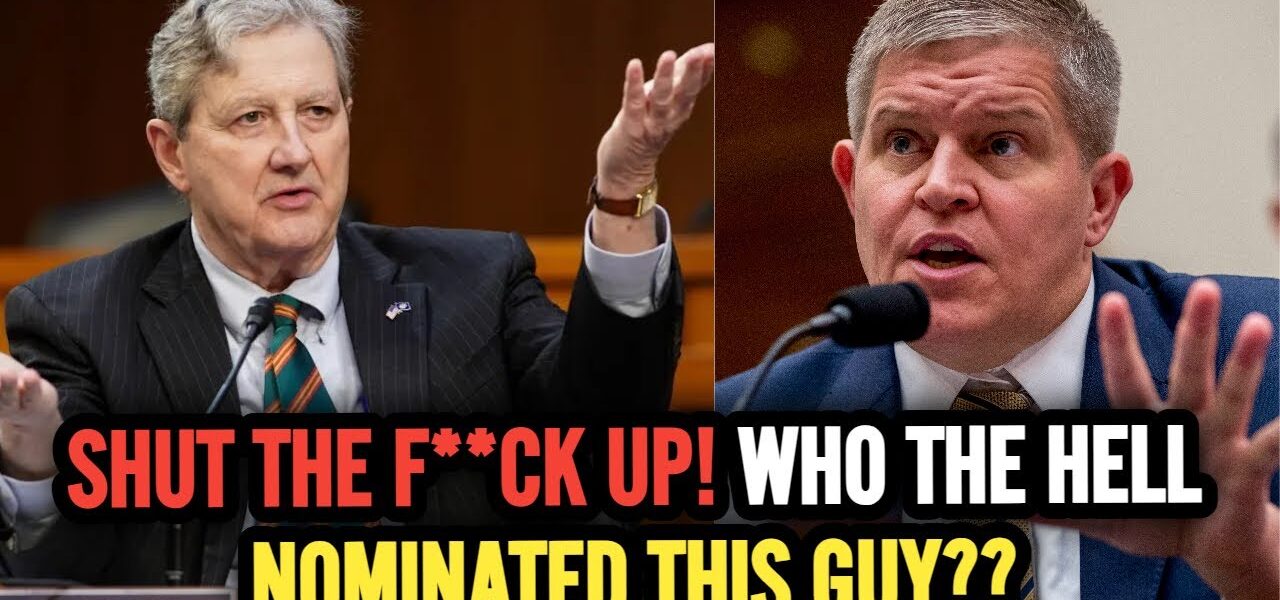
In the world of American politics, few moments are as revealing as a confirmation hearing gone off the rails. Recently, Senator John Kennedy’s questioning of David Chipman, President Biden’s nominee for Director of the Bureau of Alcohol, Tobacco, Firearms and Explosives (ATF), became one of those viral spectacles—a moment that left viewers in shock, critics emboldened, and advocates for clear governance deeply concerned.
The exchange wasn’t just a political skirmish. It exposed a critical flaw in how policy is debated, defined, and enforced in the United States. At the heart of the controversy was a single, deceptively simple question: “How do you define an assault weapon?” The nominee, tasked with potentially leading the federal agency responsible for regulating firearms, failed to provide a clear answer. The implications of that failure ripple far beyond one hearing—they touch on issues of law, liberty, and the very nature of effective government.
This article will break down the hearing, analyze why the definition of “assault weapon” is so contentious, and explore what this moment reveals about the state of American governance.
The Hearing: A Breakdown
Setting the Stage
David Chipman’s nomination to head the ATF came at a time of heightened debate over gun control in America. Mass shootings, rising crime rates, and polarized politics have made the question of firearm regulation a central issue. The ATF, as the agency tasked with enforcing federal gun laws, sits at the nexus of this debate.
Senator John Kennedy, a Republican from Louisiana known for his sharp wit and pointed questions, wasted no time in zeroing in on the issue that would define the entire hearing: the meaning of “assault weapon.” Kennedy’s approach was simple but effective—he asked direct questions, demanded clear answers, and refused to accept political evasions.
The Exchange
The hearing began with Kennedy congratulating Chipman and quickly moving to the heart of the matter. “Do you believe in banning assault weapons?” Kennedy asked.
“I do, sir,” Chipman replied.
“Okay. Define assault weapons,” Kennedy pressed.
Here, Chipman faltered. He responded, “Assault weapons would be something that, um, members of Congress would define.”
Kennedy, unsatisfied, pushed further. “Well, how do you define it? You’re going to be running the agency.”
Chipman hesitated. “Senator, I think this is a good question. If I am, um, confirmed as ATF director…”
Kennedy cut in, reminding Chipman of the ticking clock: “I got 35 seconds left. Define it for me, would you please, sir?”
Chipman’s response was telling. “The bill to ban assault weapons is dozens of pages. There’s no way I could define an assault weapon.”
Kennedy, incredulous, summarized the issue: “You’re going to run this agency and you don’t have a definition of assault weapon? Just give me your definition.”
Chipman tried to offer the ATF’s current working definition but never provided a clear, personal answer. The exchange ended with Kennedy stating, “How can I vote for you? I’m done, Mr. Chairman.”
The Fallout
The moment quickly went viral. Commentators described it as a “train wreck,” a “mic drop,” and a “nomination destroyed.” Viewers on both sides of the gun debate were left questioning how someone could be nominated to regulate firearms without a clear definition of what they intended to regulate.
Why the Definition Matters
Legal Implications
The term “assault weapon” is one of the most contentious in American gun policy. Unlike “handgun” or “rifle,” which have relatively clear definitions, “assault weapon” is a term that has evolved in the political and legal landscape.
Federal Law: The 1994 Federal Assault Weapons Ban defined “assault weapons” based on specific features—such as detachable magazines, pistol grips, folding stocks, and flash suppressors. However, the ban expired in 2004, and no federal consensus has replaced it.
State Laws: States like California, New York, and Connecticut have their own definitions, often based on cosmetic features rather than mechanical function. This creates a patchwork of regulations that confuses gun owners and law enforcement alike.
ATF’s Role: The ATF is responsible for enforcing whatever definitions Congress provides. Without a clear, consistent definition, enforcement becomes arbitrary and potentially unconstitutional.
Governance and Accountability
Chipman’s inability to define “assault weapon” is more than a personal failing—it’s a symptom of a larger problem in American governance. When lawmakers and regulators cannot clearly articulate what they intend to ban or regulate, the result is confusion, legal uncertainty, and public distrust.
Rule of Law: Citizens must be able to understand the laws that govern them. Vague or shifting definitions erode the rule of law and make compliance impossible.
Policy Effectiveness: If regulators cannot define what they are regulating, policies become either overbroad (banning too many items) or ineffective (failing to address the intended problem).
Political Evasion: Chipman’s repeated reference to Congressional definitions is a common tactic—passing responsibility without providing leadership or clarity.
The Political Trap
Senator Kennedy’s line of questioning was more than a rhetorical flourish—it was a carefully laid trap. By asking Chipman to define “assault weapon,” Kennedy forced him to confront the central weakness of gun control advocacy: the lack of a clear, workable definition.
Any definition Chipman provided would have been attacked from both sides. A broad definition would alarm gun owners and Second Amendment advocates; a narrow definition would be criticized as ineffective by gun control supporters. By refusing to answer, Chipman tried to avoid controversy but instead exposed the core problem.
The Broader Debate: Assault Weapons in America
Origins of the Term
The term “assault weapon” originated in the 1980s as a way to describe semi-automatic firearms that looked similar to military rifles. However, most “assault weapons” in civilian hands are not fully automatic—they fire one round per trigger pull, just like most hunting rifles.
Military vs. Civilian: True “assault rifles” are select-fire weapons used by the military. Civilian “assault weapons” are typically semi-automatic and differ mainly in appearance.
Cosmetic Features: Laws often focus on features like pistol grips, flash suppressors, and barrel shrouds—none of which make a firearm inherently more dangerous.
The 1994 Ban
The Federal Assault Weapons Ban, signed into law by President Bill Clinton, prohibited the manufacture and sale of certain semi-automatic firearms based on their features. Studies on its effectiveness are mixed:
Crime Rates: Some studies found little impact on overall gun crime or mass shootings, as banned weapons were rarely used in crimes.
Legal Challenges: The ban expired in 2004, and attempts to renew it have stalled in Congress.
State-Level Regulations
States have filled the gap with their own laws, leading to confusion and inconsistency:
California: Defines “assault weapon” based on a combination of features. Owners must register or modify their firearms to comply.
New York: The SAFE Act uses similar criteria, leading to legal challenges and widespread confusion.
Other States: Definitions vary widely, with some focusing on magazine capacity, others on specific features.
Public Perception
Polls show that many Americans support “assault weapon” bans, but few can define what the term means. Media coverage often conflates military weapons with civilian firearms, further muddying the waters.
The Consequences of Vagueness
For Gun Owners
Unclear definitions create anxiety and uncertainty for millions of law-abiding gun owners. If the rules change or are enforced arbitrarily, citizens can suddenly find themselves on the wrong side of the law.
Compliance: How can gun owners comply with regulations if they don’t know what is regulated?
Legal Risks: Vague laws invite selective enforcement and legal challenges, undermining public trust.
For Law Enforcement
Police and ATF agents must interpret and enforce laws. When definitions are unclear, enforcement becomes inconsistent and sometimes unjust.
Training and Consistency: Officers need clear guidelines to do their jobs fairly.
Public Relations: Arbitrary enforcement damages relationships between law enforcement and the communities they serve.
For Policymakers
Lawmakers who pass vague or poorly defined laws risk backlash from both sides of the debate. Effective governance requires clarity, specificity, and accountability.
The Governance Challenge
Why Definitions Matter
In law and policy, definitions are everything. They determine what is legal or illegal, what is protected or banned, and how citizens and regulators interact.
Clarity: Clear definitions allow for fair enforcement and public understanding.
Consistency: Uniform definitions prevent confusion and legal challenges.
Legitimacy: When citizens understand and agree with the rules, governance gains legitimacy.
The Role of the ATF
The ATF’s job is to enforce federal laws as written by Congress. However, as the hearing revealed, the agency’s effectiveness depends on the clarity of those laws. Nominees and leaders must be able to articulate, defend, and enforce the rules.
Leadership: Effective leaders provide guidance, clarity, and accountability.
Responsibility: Passing the buck to Congress or others undermines the agency’s role.
Lessons from the Hearing
Preparation Matters
Chipman had months to prepare for the hearing. The question of defining “assault weapon” was entirely predictable. His inability to answer suggests either a lack of preparation or a deliberate avoidance of controversy.
Accountability Is Essential
Public officials must be accountable for the policies they support. If a nominee supports banning “assault weapons,” they must be able to define what they mean. Evasion erodes public trust and undermines the confirmation process.
Policy Must Be Grounded in Reality
Effective policy is based on clear definitions, achievable goals, and measurable outcomes. Vague bans or regulations do little to solve real problems and often create new ones.
The Way Forward
For Lawmakers
Congress must take responsibility for crafting clear, workable definitions in gun legislation. Passing the burden to agencies or courts is a recipe for confusion and legal chaos.
For Regulators
Agency leaders must be able to articulate and defend the policies they enforce. Preparation, transparency, and accountability are non-negotiable.
For Citizens
Vigilance is required. Citizens must demand clarity from their leaders and hold them accountable for vague or arbitrary policies. The rule of law depends on public understanding and participation.
Conclusion
The ATF nomination hearing was more than a political spectacle—it was a lesson in the importance of clarity, accountability, and effective governance. The inability to define “assault weapon” revealed a deeper problem in American policy: the tendency to legislate by emotion, appearance, or political convenience, rather than by clear, workable standards.
As the debate over gun control continues, this moment should serve as a wake-up call. If America is to have meaningful, effective policies—whether on guns or any other issue—leaders must be able to define what they mean, explain what they intend, and enforce the law fairly and consistently.
Senator Kennedy’s question was simple. The answer should have been, too. Until policymakers and regulators can provide that clarity, the debate will remain mired in confusion, controversy, and distrust.